Prime Minister Modi’s impromptu stop for street food in Jhargram ignites a war of words with Chief Minister Mamata Banerjee. This analysis explores the role of symbolic gestures and cultural performance in modern Indian electioneering.
Political campaigns in India often transcend policy debates to enter the realm of cultural symbolism. When a national leader steps out of a high-security motorcade to engage with a local vendor, the act is rarely just about satisfying hunger. It is a calculated effort to bridge the gap between the political elite and the grassroots electorate.
In the high-stakes environment of the West Bengal Assembly Elections, every gesture is scrutinized for its underlying message. A simple purchase of a local snack can become a focal point of contention. This illustrates the deep-seated rivalry and the fight for the cultural soul of the voters between two powerful and distinct political entities.
The Incident at Jhargram
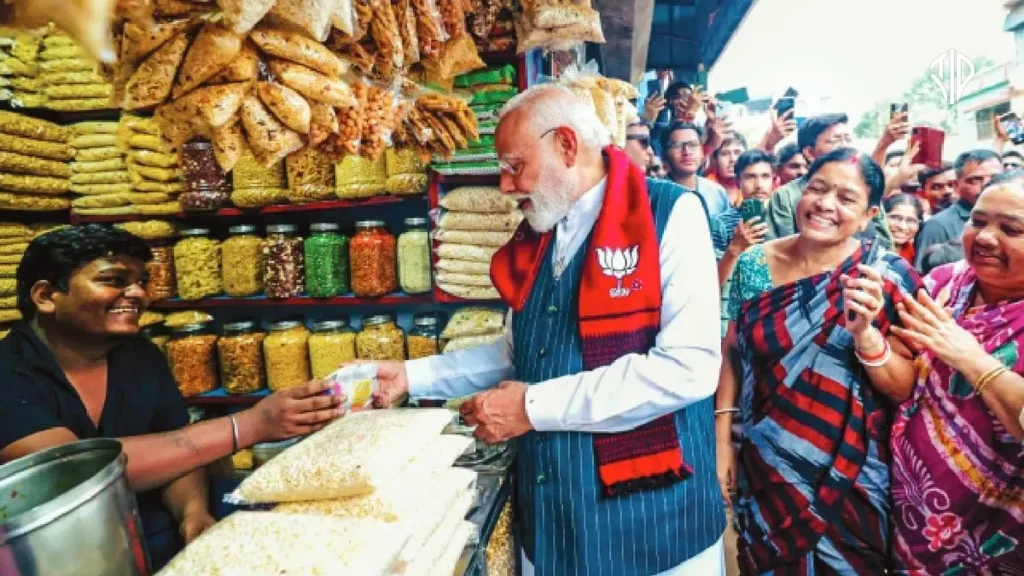
During a campaign tour in Jhargram on April 19, 2026, Prime Minister Narendra Modi made an unscheduled stop to purchase jhalmuri. This beloved Bengali street food, made of puffed rice, green chillies, and mustard oil, serves as a staple of everyday life in the state. The move was widely documented, aiming to portray the leader as accessible and attuned to regional tastes.
However, West Bengal Chief Minister Mamata Banerjee was quick to dismiss the event. Speaking at a rally the following day, she characterized the stop as mere drama. Her critique suggests that such actions are choreographed performances intended to distract from core issues. In her view, these moments are manufactured to create a false sense of belonging.
The Strategy of Political Symbolism
Politicians often use food as a medium to perform populism. By consuming local delicacies, leaders attempt to signal a shared identity with the regional population. In Bengal, where cultural pride is a significant electoral factor, the choice of jhalmuri—a humble and ubiquitous snack—is a strategic move to soften a national leader’s image for the local audience.
Banerjee’s swift rebuttal is part of a broader strategy to label her opponents as outsiders who perform for the cameras. This tug-of-war over authenticity is a recurring theme in the 2026 campaign. The Trinamool Congress positions itself as the true custodian of Bengali culture, contrasting itself against the perceived artifice of the Bharatiya Janata Party.
| Strategy Element | Trinamool Congress (TMC) | Bharatiya Janata Party (BJP) |
|---|---|---|
| Core Narrative | Regional identity and local protectionism | National integration and development |
| Symbolic Focus | Portraying opponents as cultural outsiders | Demonstrating local accessibility and presence |
| Media Approach | Grassroots rallies and emotive speeches | High-visibility events and social media optics |
| Key Rhetoric | Focus on Ma, Mati, Manush (Mother, Land, People) | Focus on Modi ki Guarantee and governance |
Historical Parallels in Political Theater
Symbolic gestures are not new to Indian realpolitik. From historic marches to contemporary photo opportunities at tea stalls, political theater has always played a role in mobilizing the masses. These moments provide optics that often carry more weight in the public imagination than dense legislative manifestos or complex economic data points.
In the 2026 cycle, the battle for West Bengal remains one of the most watched contests in the country. Data from previous polls suggests that swing voters are often influenced by the perceived relatability of a leader. Therefore, even a small interaction with a street vendor can have a disproportionate impact on the prevailing political narrative.
Actionable Takeaways for the Electorate
As the campaign intensifies, voters must look beyond the spectacle of street-side stops. While cultural symbols are important for representation, the ultimate impact of an election lies in policy outcomes. Citizens should evaluate how these symbolic gestures translate into legislative action concerning tribal welfare, economic growth, and infrastructure in regions like Jhargram.
The 2026 Bengal elections continue to be a masterclass in political communication. Whether it is a bowl of puffed rice or a fiery speech on a podium, every element is designed to win hearts and minds. Understanding the mechanics of these optics allows the public to engage more critically with the information presented during the election cycle.
Key Takeaways
- Symbolic gestures like consuming local street food are strategic tools used to bridge the gap between high-level politicians and the grassroots electorate.
- The 2026 West Bengal campaign is characterized by a tug-of-war over cultural authenticity and regional identity between the TMC and BJP.
- Political “optics” often influence swing voters more significantly than legislative manifestos or complex economic data.
- Critical engagement from the electorate is necessary to distinguish between choreographed political theater and substantive policy commitments.
Follow us on Instagram (@inner_detail) for more updates in your feed.