The Shift Toward High-Tech Political Campaigning in Tamil Nadu
This article explores the shift toward high-tech political campaigning in Tamil Nadu, focusing on the use of robotics and AI to maximize voter engagement. We analyze how TVK is leveraging cutting-edge technology to create a state-wide presence for the 2026 Assembly elections.
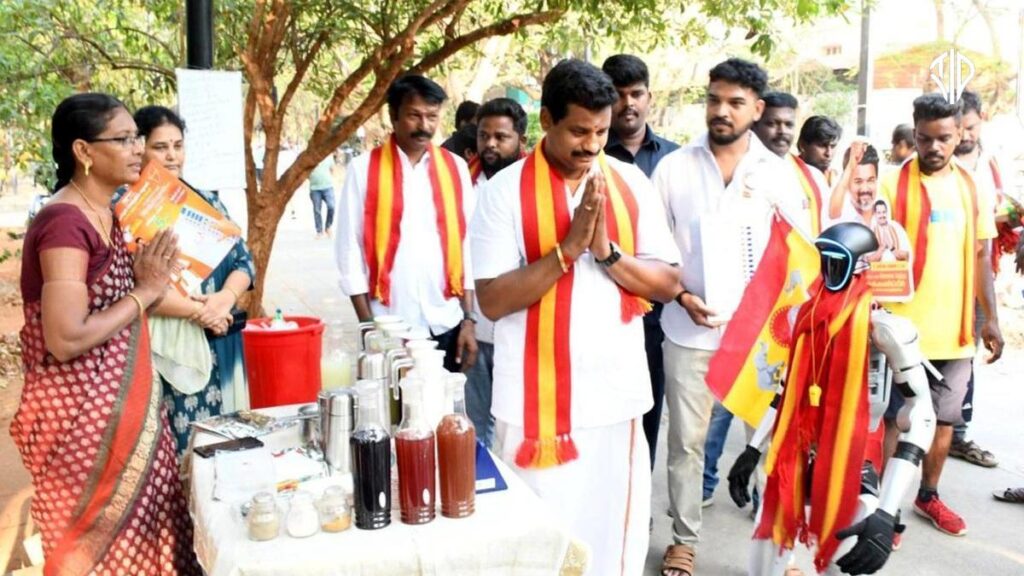
In the bustling Racecourse area of Coimbatore, the traditional sounds of drums and chants were recently replaced by the mechanical hum of a Unitree robot. This four-legged machine, adorned in the maroon and yellow of the Tamilaga Vettri Kazhagam (TVK), marks a significant departure from standard Indian campaigning methods.
Residents stopped their morning walks to interact with a machine that could shake hands and wave, effectively turning a routine door-to-door visit into a viral social media event. This fusion of robotics and regional politics offers a glimpse into how the next generation of leadership plans to engage with a tech-savvy electorate.
The Coimbatore High-Tech Outreach
The TVK candidate for Coimbatore South, V. Senthilkumar, recently introduced a fully operational walking robot to lead his ground outreach efforts. Clad in a party shawl, the robot served as a mobile ambassador, drawing massive crowds who were eager to document the mechanical campaigner on their smartphones.
Beyond the novelty, this move addresses the challenge of physical presence in a crowded political landscape. By using a robot, the campaign successfully transitioned from a standard political walkathon to a high-density media event that appeals to younger demographics who are often indifferent to traditional rallies.
The Strategic Utility of Robotics
For a new political entity like TVK, founded by actor Vijay, the use of Unitree robotics is a strategic solution to logistical hurdles. These machines are not just toys; they represent a significant investment in a tech-first strategy designed to compensate for the party’s relatively fresh organizational structure on the ground.
These robots are known for their mobility and are often used in industrial settings, yet their application in realpolitik—the practice of politics based on practical rather than moral or ideological considerations—is a fresh trend in India. It creates an aura of modernization that sets the party apart from established giants.
Comparative Cost of Campaign Technology
| Robot Model | Primary Category | Approximate Price (USD) |
|---|---|---|
| Unitree Go2 | Quadruped (Consumer) | $1,600+ |
| Unitree R1 / R1 AIR | Humanoid (Entry) | $4,900 – $5,900 |
| Unitree G1 (Standard) | Humanoid (Advanced) | $16,000 |
The Wider Digital Arsenal: Holograms and AI
The robot in Coimbatore is part of a broader technological blitz across Tamil Nadu. In regions like Kumbakonam, candidate Vinoth Ravi has deployed life-sized 3D holograms of party leader Vijay. This allows the leader to deliver synchronized, high-impact speeches in multiple locations simultaneously, solving the problem of physical transit.
Furthermore, reports suggest the party is exploring AI-generated voices to personalize digital outreach. By recreating the leader’s voice for automated calls or messages, the campaign ensures a sense of direct connection with the voter. This is similar to recent global trends where AI is used to scale a candidate’s personal touch.
The Puducherry Precedent
This is not the first time such tech has appeared in the region. In Puducherry, a robot named Nila, dressed in traditional attire, was used at polling stations to greet voters in both Tamil and English. Such initiatives aim to reduce voter friction and make the democratic process feel more inclusive and modern.
Historically, Indian elections have relied on massive cut-outs and physical stamina. However, as mobile internet penetration reaches all-time highs, the battleground has shifted from the street corner to the digital screen. TVK appears to be betting on the idea that the future of governance is inextricably linked to technological fluency.
Analyzing the Impact on Voter Psychology
The primary goal of this silicon-driven strategy is to create a buzz that translates into brand recall. For a first-time voter, the sight of a robot or a hologram is more memorable than a standard flyer. It signals that the party is forward-looking and capable of handling the complexities of a modern economy.
As the April 2026 polls draw closer, the success of this strategy will depend on whether the “wow factor” can be converted into actual votes. While technology can open doors and start conversations, the ultimate victory will still rely on how these digital tools communicate the party’s core policy promises to the common citizen.
Key Takeaways
- Technological Innovation: TVK is utilizing Unitree quadruped robots and 3D holograms to bypass traditional logistical barriers in Tamil Nadu.
- Voter Engagement: The use of robotics serves as a high-density media event, specifically targeting tech-savvy youth and first-time voters.
- Scalability: Tools like AI-generated voices and synchronized holograms allow party leaders to maintain a presence in multiple locations simultaneously.
- Strategic Modernization: This tech-first approach positions the party as a forward-thinking alternative to established political giants ahead of the 2026 elections.
Follow us on Instagram (@inner_detail) for more updates in your feed.